Book review: Gavin Larsen and Gene Schiavone’s ‘Infinite Steps: Thirty-three Dancers and Their Lives in Ballet’
Our take
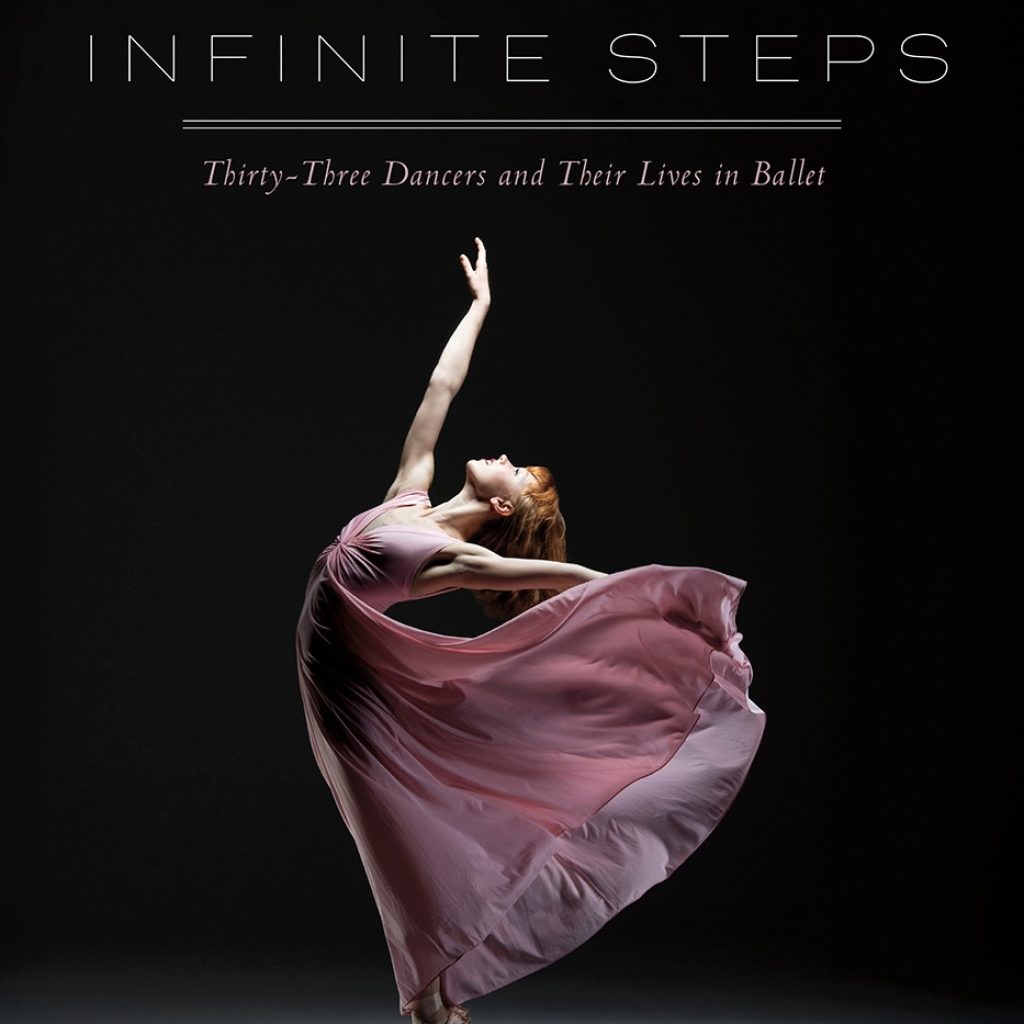
In the vibrant world of dance, few narratives resonate as deeply as those that unveil the lives of the artists behind the performances. Gavin Larsen and Gene Schiavone's book, *Infinite Steps: Thirty-three Dancers and Their Lives in Ballet*, takes readers on an intimate journey through the experiences of ballet dancers, illuminating not just their artistic triumphs but also the personal challenges they face. This exploration is timely and relevant, especially as discussions surrounding body positivity and self-acceptance become increasingly vital in today’s society. As we witness the impact of the arts, such as in events like Actress Katie Holmes to be honored at ABT’s 2026 Spring Gala, we are reminded of the resilience and strength that artists embody.
Larsen, a former dancer, brings a unique perspective to this project, having stood on stage and felt the thrills and pressures that accompany such a demanding profession. Her collaboration with Schiavone, who transitioned from a different career into dance photography through personal connections, highlights the serendipitous nature of creative partnerships. Together, they craft a narrative that not only showcases the beauty of ballet but also acknowledges the intricate tapestry of life experiences that shape each dancer’s journey. The opening chapters of *Infinite Steps* paint a picture of diverse backgrounds, struggles, and victories, echoing themes of perseverance that can inspire anyone, regardless of their artistic inclinations.
In a time when body image issues are prevalent, particularly among women, the stories within this book serve as a reminder that the journey to self-acceptance is not solitary. The dancers featured exemplify the idea that confidence and beauty come in many forms, and the art of ballet is not just about physical appearance, but about expressing one's unique story. This perspective aligns with movements promoting body positivity and the celebration of diversity in all shapes and sizes. Furthermore, it resonates with initiatives like Dance takes center stage in Lincoln Center’s ‘Summer for the City’, where inclusivity in the arts is championed, providing a platform for all voices in the dance community.
The insights gleaned from *Infinite Steps* extend beyond the realm of ballet, offering life lessons applicable to anyone seeking to embrace their individuality. It encourages readers to find joy and empowerment in their own bodies, to celebrate their personal narratives, and to understand that the journey of self-discovery is ongoing. Though ballet may seem like an elite art form, Larsen and Schiavone remind us that the essence of dance is rooted in expression, connection, and the celebration of life itself.
As we look to the future, it will be fascinating to see how *Infinite Steps* influences the ongoing dialogue about body positivity and self-love within the performing arts. Will it inspire more artists to share their stories, fostering a broader understanding of the myriad experiences that shape us? The lives of dancers are filled with infinite steps, and through their narratives, we can all learn to embrace our own paths with grace and confidence.
Book: Infinite Steps: Thirty-three Dancers and Their Lives in Ballet
Author: Gavin Larsen and Gene Schiavone, University Press of Florida, 2026.
Gavin Larsen once graced stages, and now she shares the lives of dancers through the page. Gene Schiavone might have never seen himself with a second career of dance photography, but connections through his wife brought him into the studio and concert hall with camera at the ready…and to late nights of curating, editing and finalizing image sets.
The serendipity of social/professional connection brought them to work together. Dancers’ lives, the ones they’re now spotlighting through Infinite Steps: Thirty-Three Dancers and Their Lives in Ballet, can be just as serendipitous…and immensely fulfilling partly because of it. The text tells such stories of 33 dancers, with a short essay and accompanying photos for each.
The book demonstrates the multiplicity of who dancers are: across race, age, country of origin, and far beyond. It makes “infinitely” clear that dance touches lives across time, across the world, and across the potentiality of life experience.
Also key in the book is a broad swath of notoriety and “fame”, from Roberto Bolle and Skylar Brandt and Paloma Herrera to younger dancers just beginning their career (including Laina Mae Kirkeide, Hailey Fairhurst and Marja’ Quaqua) – and each is treated with equal respect and care. Importantly, fame is no sort of biasing currency in how the creators tell their stories.
Also importantly, to this humble reviewer, the text does not shy away from the hard truths and the areas where the field needs to work to address sincere and systemic issues: those concerning race, dancer wellness, pedagogy, and beyond.
Cory Stearns’ story, for example, underscores the importance of ensuring that established dancers support, rather than ostracize and even belittle, emerging artists (he describes what felt something akin to “being hazed” in his early professional years – heartbreaking to read). Thankfully, Stearns describes how he no longer sees such a dynamic at play. It’s a small sign that positive change is blooming.
Karine Seneca and Herman Cornejo’s stories portray the quieter, yet no less turbulent struggles some dancers experience on their path to their dreams – the struggles of the mind. It’s a reminder to keep pushing forward the progress the field has made with respect to dancer mental health. It’s needed, and arguably long overdue.
A particularly memorable example of the text thoughtfully handling hard topics is a dancer anonymously sharing the story of her struggles with an eating disorder and her path to healing. “Marie” was at first hesitant to publicly recount all of that, but ultimately decided that doing so could help other dancers along their path to overcoming such struggles. Dancers are roughly three times more likely than those in the general population to experience an eating disorder, according to research through the National Institutes of Health; telling stories like hers is a step on the path of addressing this issue.
Mentorship, passing down knowledge and wisdom through generations, can also be incredibly supportive of emerging dancers. Lineage and tutelage have always been central to the art of dance, and the text pays homage to that.
Misty Copeland’s story, for instance, illustrates the importance of mentorship. Raven Wilkinson, for one, showed her that she could soar to the highest heights: no matter how late she started, how unstable her early family life was, or the color of her skin.
Copeland did not become the (arguably) most famous living ballerina by chance – nothing like it. Along with, yes, some serendipity, she rose to where she has through work ethic combined with the caring wisdom of elders. The text commendably explicates these complex interlacing forces in her path – in the path of every dancer, for that matter.
The story of Anastasia and Denis Matvienko, a dancer couple who chose to flee Russia in the midst of the conflict with Ukraine, illustrates the ways that world events can impact dancers’ lives – and the way that their resilience and need to move, to express themselves through the body, persists.
Dance even became a balm for this couple’s uncertainty and malaise in the face of it all. Their resourcefulness also seemed key in their overcoming; in their time of need, they called upon their network – who very much came through for them. Similarly, Xiomara Reyes’ story begins in Communist Cuba. Ballet was a path to a better life for her, to the U.S. and stardom.
Other dancer life stories in the book demonstrate how ballet can fit into other life paths. Such routes sometimes stay within the performing arts: including Kylie Edwards, a dancer who changed course into acting, and Jacob Hughes, another who shifted from ballet to musical theater.
At other times, those paths lead away from the stage and screen; Annalise Veldhuyzen van Zanten achieved her ballet dream young and then went to college for biomedical science. She still dances recreationally. Her story demonstrates that dance does not have to be “all or nothing”; one can invest in other interests and areas of life and still keep dance as a part of one’s days.
Gavin Larsen’s writing does much for making these stories vivid and poignant. Her voice is accessible and economic, yet also descriptive and sophisticated. A particularly compelling aspect to her style is how she uniquely frames each dancer’s story, and brings the reader into that through the first paragraph or so of each essay. Such individuality only appropriately aligns with how each dancer’s story is singular. Yet common threads shine through these stories: perseverance, adaptability, fortitude and a plain need to dance.
Also shining through is how articulate dancers often are. A stereotype of dancers is that they might be intelligent in body, but not in mind – but this text reveals that to be a myth. Each featured artist is well-spoken and thoughtful in their own way, not to mention the clever ways they each have overcome obstacles in their respective ways.
Such obstructions do come with costs, sometimes dire ones. Joseph Gatti’s story, for instance, highlights the need to better address dancers’ physical needs, accounting for the extreme athletic demands on their body – and also offers a model for doing that through his company, United Ballet Theatre.
Joy, gratitude and kindness persist, however. A lovely motif is the letters that dancers and company administrators send to Gene Schiavone as appreciation for them working together and gifts of prints he sends. This gesture, taken by several dancers individually, demonstrates the graciousness in the hearts and actions of so many of these artists (as well as in Schiavone himself, who initiated it all through sending dancers prints of themselves).
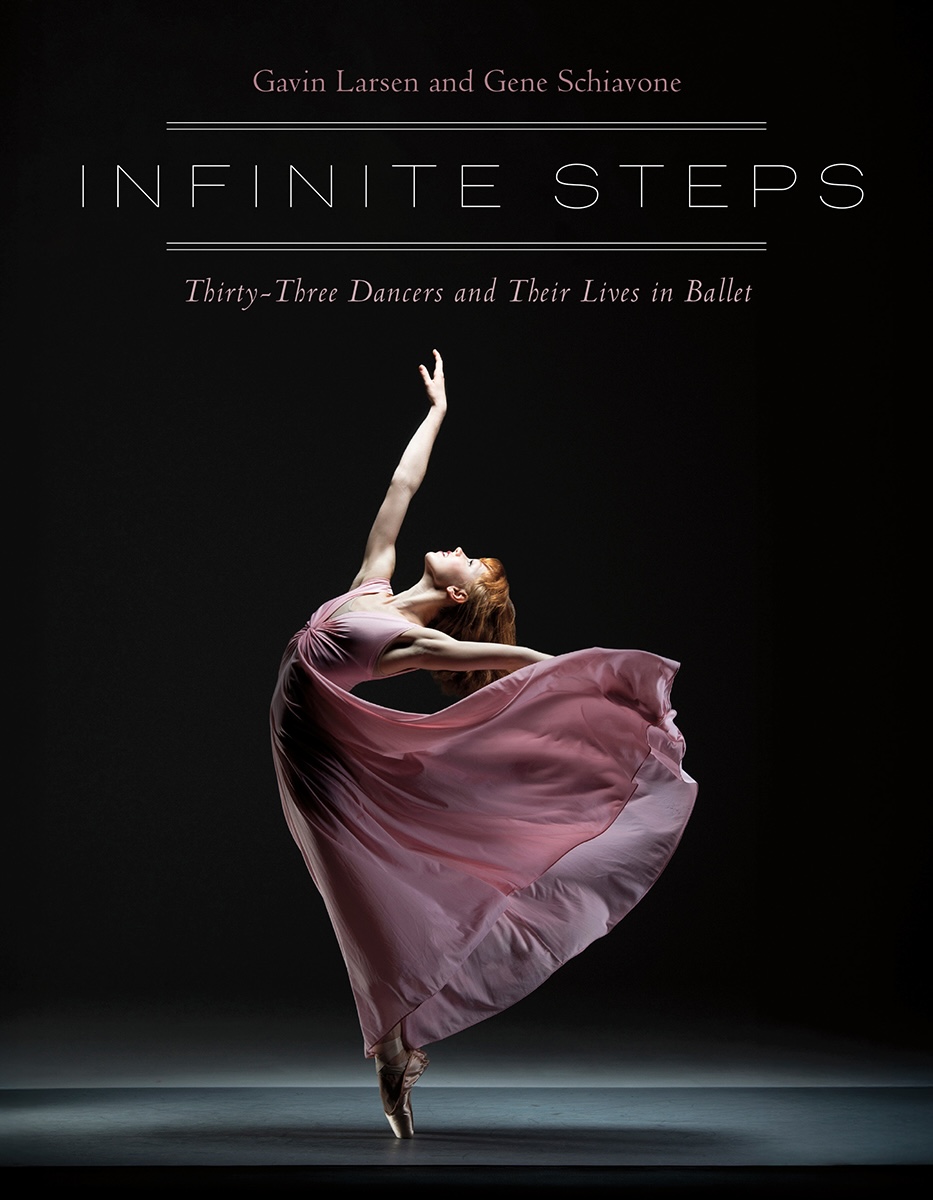
No review of Infinite Steps is complete without praise for the photography. Schiavone’s work is visually entrancing as well as impactful on the spirit. Each photo draws the eye in through sheer aesthetic beauty, but it is often the soulfulness that makes this writer stay savoring the image for a moment or two more.
The images run the gamut: photography studio-polished, in outdoor settings, performance shots, of more intimate, candid rehearsal moments. No matter the context, each image seems to capture the dancer’s spirit, their unique fire that keeps them dancing and moving forward through all of the challenges of the life they’ve chosen (or that chose them? – a perpetual question).
Part of me would love to hear similar stories from dancers specializing in other styles: contemporary dancers, commercial dancers, musical theater artists, et cetera. Their stories would no doubt be similar, yet also speak to different difficulties, blessings, and circumstances. That leaves room for another book, one I hope to see: from Larsen and Schiavone or other authors.
The last artist that the text honors is Jennifer Alexander, a dancer who was also seemingly a notably kind and gracious soul – who, by those qualities, positively impacted everyone she worked with and met. She tragically passed away from a car accident.
Sometimes it is when we lose someone that we can truly see all they were and all they gave, the positive ripple effects that their doing and being in the world caused. With books like Infinite Steps: Thirty-Three Dancers and Their Lives in Ballet, we at least can see a bit more of that from the lives of thirty-three extraordinary artists. Dive in to experience it yourself, and see how their stories may resonate with you!
By Kathryn Boland of Dance Informa.
The post Book review: Gavin Larsen and Gene Schiavone’s ‘Infinite Steps: Thirty-three Dancers and Their Lives in Ballet’ appeared first on Dance Informa Magazine.
Read on the original site
Open the publisher's page for the full experience