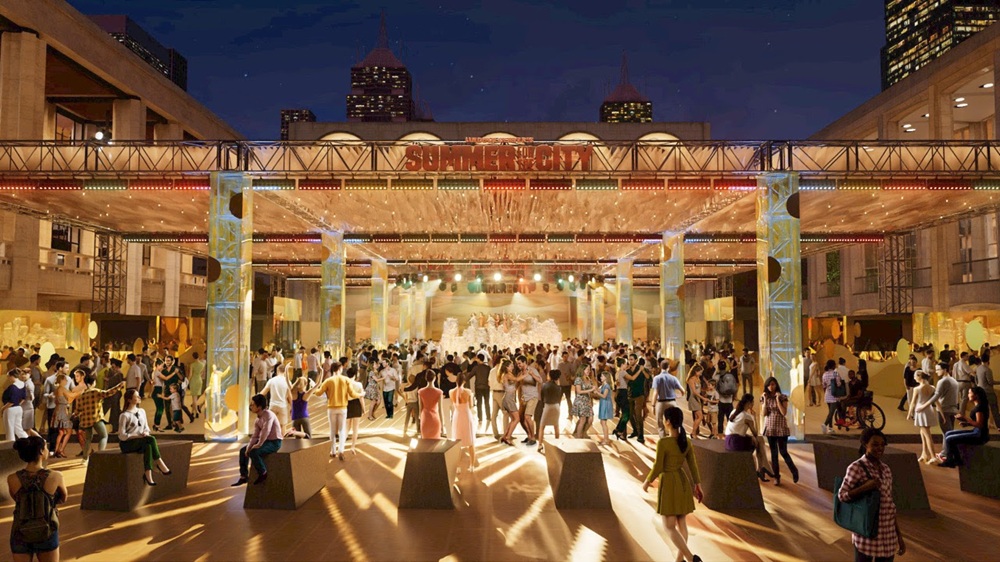
When Lincoln Center for the Performing Arts announces that dance will take center stage in its Summer for the City festival, running June 10 through August 8, 2026, it tells us something important about where we are as a culture right now. People are hungry for movement, for connection, for the kind of joy that comes from watching bodies in honest conversation with music and space. Whether you are a seasoned performer or someone who has never twirled in their living room when nobody was watching, this kind of programming matters because it reminds us that dance is not a luxury reserved for concert halls and competition stages. It is a language everyone speaks. I have spent years on poles and stages, and I can tell you that the moment my body starts to move with intention, every worry about whether I look "right" dissolves into something far more powerful than perfection. Summer for the City reinforces that idea on a massive scale, and I am here for it. Lincoln Center’s Big Umbrella Festival returns April 10–26 is another example of how the institution is opening its doors to free and choose-what-you-pay programming, which signals a genuine shift toward accessibility that every art form needs right now.
What strikes me most about this festival is its fifth iteration. That means Lincoln Center has been doing this long enough to understand that community is not built in a single season of events. It is built in the repetition, the return, the familiar faces who show up year after year because they have found something in this space that feeds them. The article mentions "movement, community, and international artistry," and I think that trifecta is exactly why dance keeps winning over every other art form when it comes to bringing people together. You cannot watch a dancer and remain disconnected from your own body. You cannot stand in a circle clapping to a rhythm and pretend you are separate from the people around you. That is what my pole fitness work has taught me day after day, show after show. The pole is not a prop for vanity. It is a tool for embodiment, for learning to trust what your body can do when you stop apologizing for it.
I also want to point out that Lincoln Center is smart to lean into international artistry this year. When you bring in voices from beyond your own walls, you disrupt the assumption that dance has one correct vocabulary. As someone who built my career in a genre that is still routinely dismissed or sexualized, I understand the importance of expanding what people believe counts as art. Strip tease, pole dance, and even the kind of body-positive fitness work I teach at home between school drop-offs and dinner prep are legitimate expressions of strength, sensuality, and self-knowledge. They belong in the same conversation as anything staged in a proscenium arch, and festivals like Summer for the City are slowly proving that point without ever needing to say it out loud.
The question I keep coming back to is this: when the lights go down on August 8, will the movement continue beyond Lincoln Center's plaza? Because the real magic of a festival like this is not what happens on stage. It is what happens in the parking lot afterward, when someone turns on a car stereo and dances in their seat because something unlocked inside them. That is the ripple we are all chasing, and I believe we are getting closer to catching it every single year.