Process in practice: Aszure Barton reflects on her upcoming collaboration with 92NY
Our take
Aszure Barton's upcoming collaboration with the 92nd Street Y (92NY) promises to be a significant event in the dance community. Her participation in the Women Move the World Harkness Mainstage Series represents not only a personal milestone but also a broader celebration of female artistry and creativity in a genre traditionally dominated by male narratives. With her commitment to showcasing a mix of new and previously performed works, Barton is set to conclude the season at 92NY on a high note, bringing together world-class dancers from varied backgrounds, including esteemed companies such as Hubbard Street Dance Chicago and Hamburg Ballet. This collaboration is a testament to the power of dance as a medium for expression and connection, which resonates particularly well in the current climate where diverse voices are increasingly being recognized and celebrated.
Barton’s work is notable for its ability to weave intricate narratives through movement, a skill that aligns with the ongoing efforts to elevate female perspectives in the arts. In a field where representation matters, her collaborations with artists she has formed a creative kinship with underscore the importance of community and shared vision in the dance world. Projects like this offer a platform to highlight not just the individual talents of each dancer but also the collective strength of women in the arts. This echoes the sentiments expressed in other recent articles, such as Actress Katie Holmes to be honored at ABT’s 2026 Spring Gala, which also showcases the vital role of women in shaping the future of performing arts.
Moreover, Barton's collaboration is a reminder of the necessity for spaces that encourage artistic growth and experimentation. It is through platforms like 92NY that artists can explore new ideas and push boundaries. This is particularly crucial as we navigate a post-pandemic world where the arts have faced unprecedented challenges. As audiences return to theaters, their expectations evolve, and the demand for innovative, thought-provoking performances rises. Barton's ability to present both fresh works and reimagined pieces speaks to her adaptability and insight into current artistic trends. It is a balancing act that many dancers and choreographers face today, and her approach can serve as an inspiration for emerging artists.
As we look ahead to Barton's performance, it is essential to consider the implications of her work within the larger context of dance and gender equality. How will her contributions influence the next generation of dancers, particularly young women seeking to carve their paths in what can often be an unforgiving industry? The conversation surrounding female empowerment in the arts is more relevant than ever, as initiatives like Dance takes center stage in Lincoln Center’s ‘Summer for the City’, which promote widespread access to dance, highlight the need for inclusivity and diverse representation.
Aszure Barton's collaboration with 92NY is more than just a performance; it is a celebration of the resilience of female artists and the transformative power of dance. It challenges us to reflect on our own perceptions of artistry and representation while encouraging us to support those who dare to express themselves authentically. As we anticipate this event, one must ponder: how can we further foster environments that uplift and empower all artists, ensuring that their voices are heard and celebrated on grand stages? The future of dance holds promise, and it is artists like Barton who will shape its narrative.
This May, Aszure Barton is participating in the 92nd Street Y (92NY)’s Women Move the World Harkness Mainstage Series. “It is an honor,” she says, to be able to share a mix of both new and previously performed works that will conclude the season at 92NY. When Alison Manning, co-director of the Harkness Dance Center, asked Barton to present a piece in this production, it was an immediate yes. Barton brings together world-class dancers drawn from collaborations with Hubbard Street Dance Chicago, Gauthier Dance//Dance Company Theaterhaus Stuttgart, Hamburg Ballet, Limón Dance Company and others – artists with whom she’s found undeniable creative kinship.
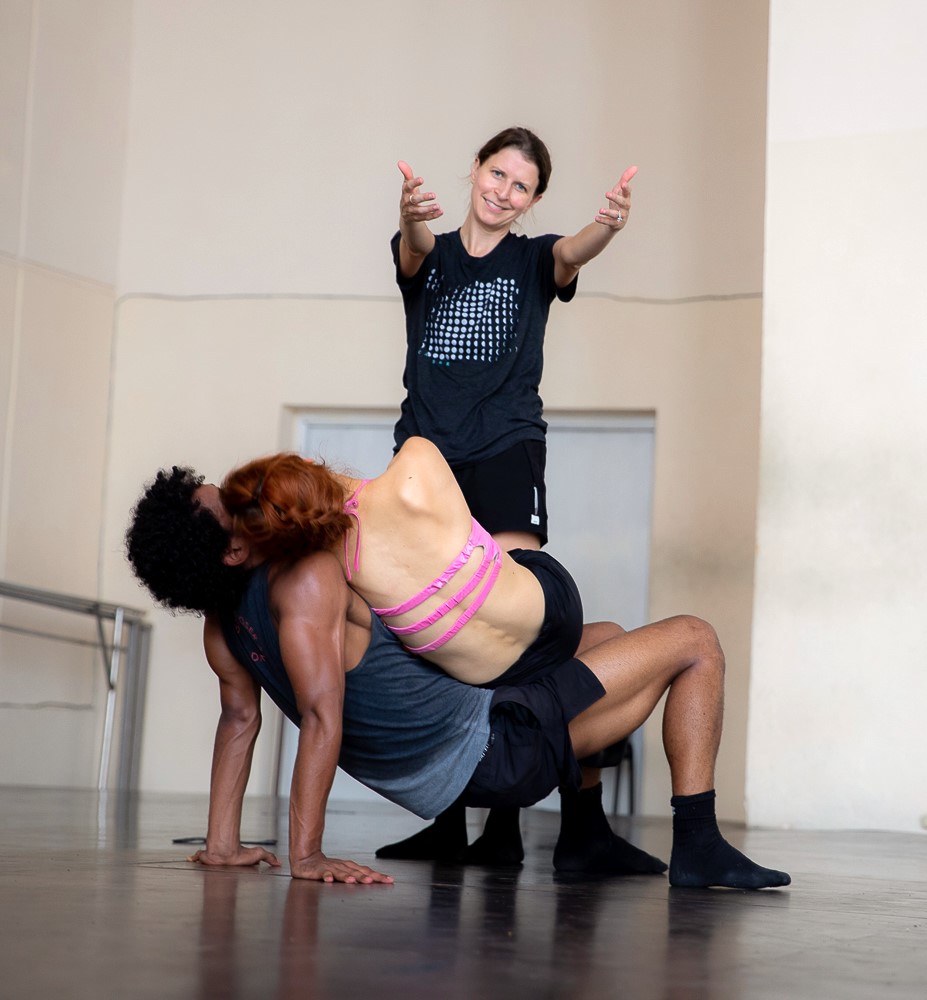
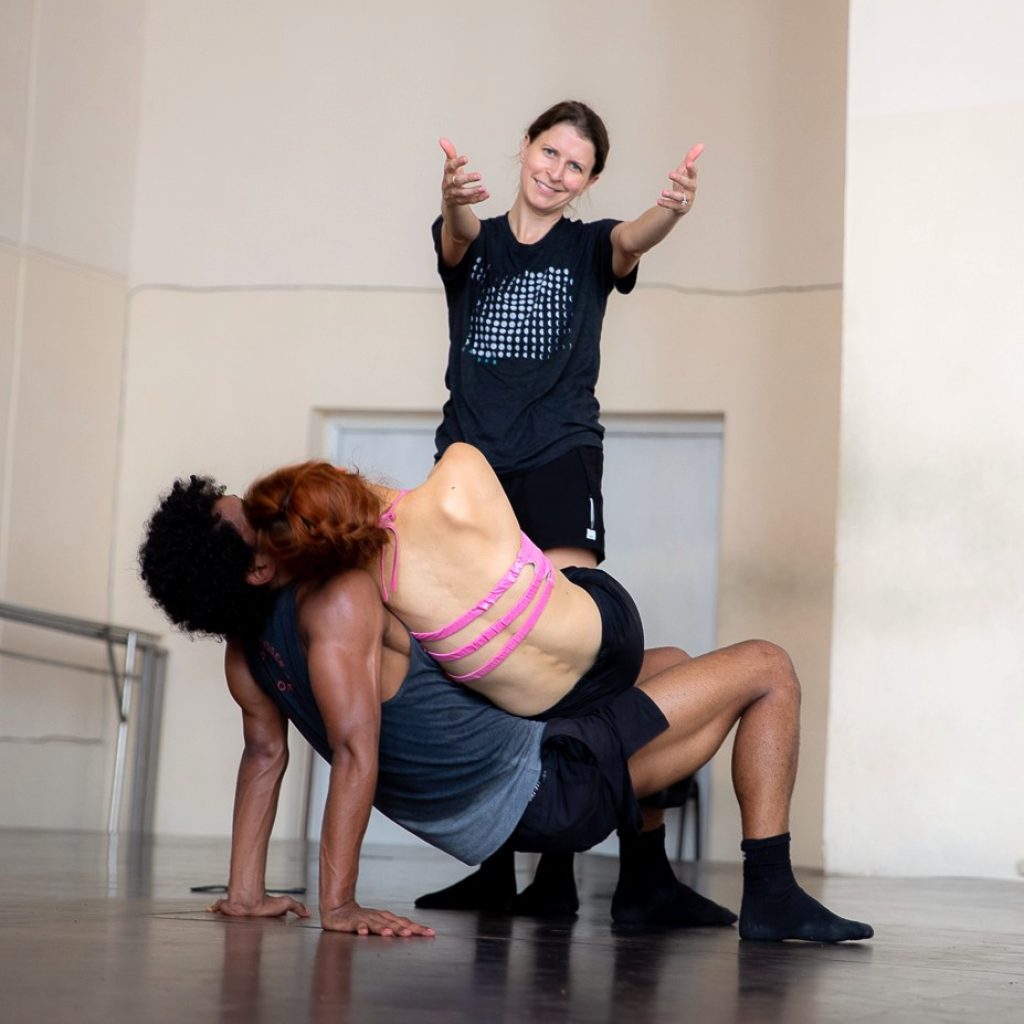
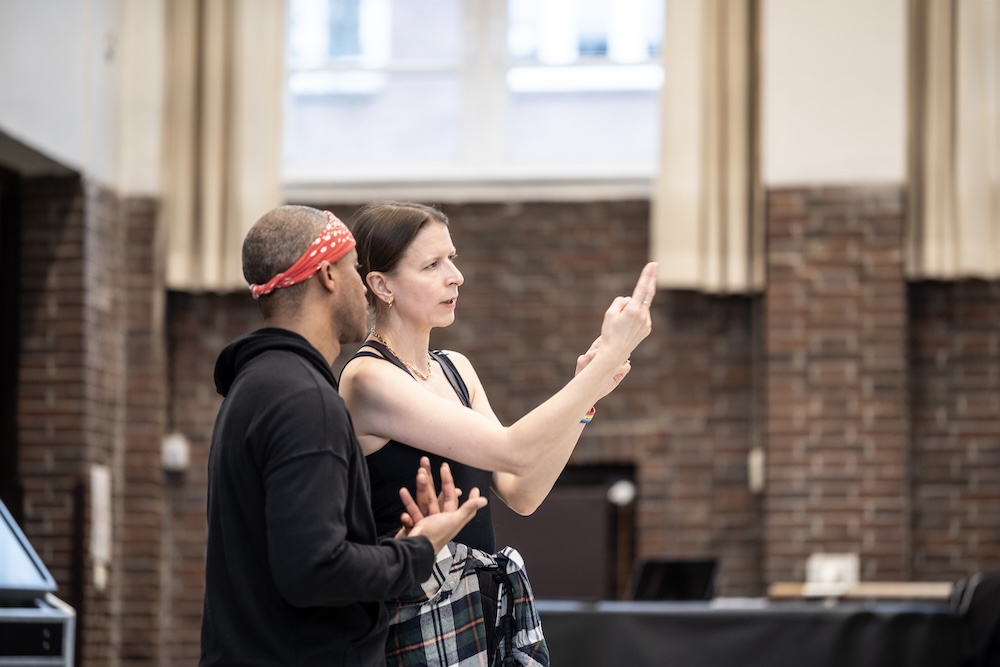
Barton describes her collective, Aszure Barton and Artists (AB&A), as more of a lab rather than a company, which is evident in the way she organizes her rehearsal process. Barton’s creation process is one based in community and collaboration. “It is always an evolution,” Barton states when describing her method. At the center of her rehearsals is a deep openness and attunement to the present moment. “I am obsessed with the process; if I could live in the studio, I would.” Her goal is to respond to the human beings that are in the space, creating a conversation with the dancers. At the core of her dance making is the art of allowing new movement to emerge, through being in continuous dialogue with the dancers. She arrives with choreography prepared but leaves space to see what is already there, how the dancers respond, how shifts and edits emerge. This collective response is what Barton finds so interesting, moving away from hierarchy and into a place of thoughtful dialogue.
Dancers from around the world will join her upcoming performance; some have been dancing with her for over 20 years, while others have joined the collective just recently. Barton looks for artists who are open, curious and kind. “If you can shine, and also be invisible,” says Barton “now that is an amazing skill.” Barton is interested in a sense of gentleness, dancers showing up to the rehearsal process as a human being rather than trying to prove skill or talent. She is drawn toward those who are “not precious about being right” and have a “work hard, play hard” mentality. Barton is eager to collaborate with dancers who share a similar interest to her in both mystery and mathematics. There is a remarkable duality that Barton gravitates toward when choosing artists, carefully molding a work environment where new ideas flow freely with ease. Among each artist performing in her upcoming show, a sense of trust is at the core. A feeling that when entering the studio, Barton will be supported both as a human and within her creative endeavor.
For Barton, making positive change in the world as a choreographer and a human being are the same. With care at the center of all that one does, she believes dance can be one path forward to making meaningful shifts in the world. “People underestimate its power. And that can move everything,” Barton says. As audience members experience the performance in May, Barton hopes that they walk away with something they can’t quite put into words. Maybe there is a new feeling that begins to arise and they leave wanting more. Rather than telling the audience exactly how she wants them to feel, Barton places great importance on leaving space for interpretation.
Barton finds inspiration to create work through feelings of loss and loneliness. A feeling that there is a sense of impermanence in all that we do, in and outside of the studio. Loss is something that she has come to terms with, and the practice of being in process is one that helps to digest those feelings. Live music also plays an important role in Barton’s inspiration. There is a sense of mystery that is apparent in both dance and music: “a reality is created without telling you how to feel,” Barton states. Dance allows the viewer to decide how they want to feel, creating an experience that holds no limitations. Barton spent years trying to understand her work as she was creating it. Now, rather than searching for meaning, she simply allows emotions and thoughts to arise on their own time. She is amazed at the finished products, often unsure of how she arrived there. A finished product that is anchored toward asking questions rather than giving away answers.
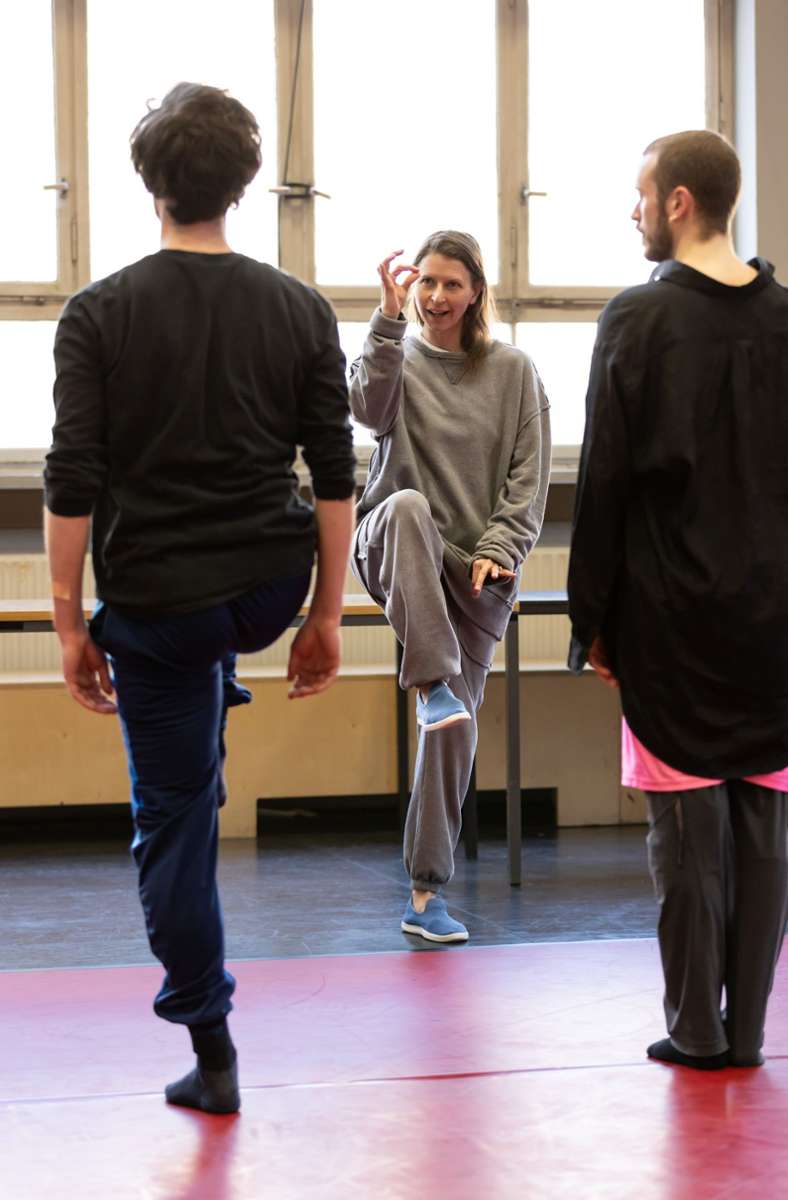
In order to create something new, Barton has spent years giving herself permission to let things fall apart. “If I try to be too heady about it, it ruins the magic,” Barton comments. Her creative practice has been a life-long journey in letting go, finding a balance between organized creation, and allowing movement to create its own shape. It is within this space of lessening the grip and giving way to the process, that she is able to produce work that feels most fulfilling. Barton comments on the fact that she “creates all these different lives, and then leaves them somewhere.”
There is a kind of fleeting energy that will be challenging to leave at the conclusion of her performance at the 92NY, but she knows that is part of the process, one that she has come to terms with. As Barton begins this new rehearsal process, she feels a sense of admiration for the dancers, and hopes the audience can hold space for their beauty.
An Evening with Aszure Barton will be presented at the 92nd Street Y on May 21. For tickets and more information, visit www.92ny.org/event/an-evening-with-aszure-barton.
By Rachel Marchica of Dance Informa.
The post Process in practice: Aszure Barton reflects on her upcoming collaboration with 92NY appeared first on Dance Informa Magazine.
Read on the original site
Open the publisher's page for the full experience