Trisha Brown Dance Company Debuts at Vivo Performing Arts with their First Boston-Area Show in 15 Years
Our take
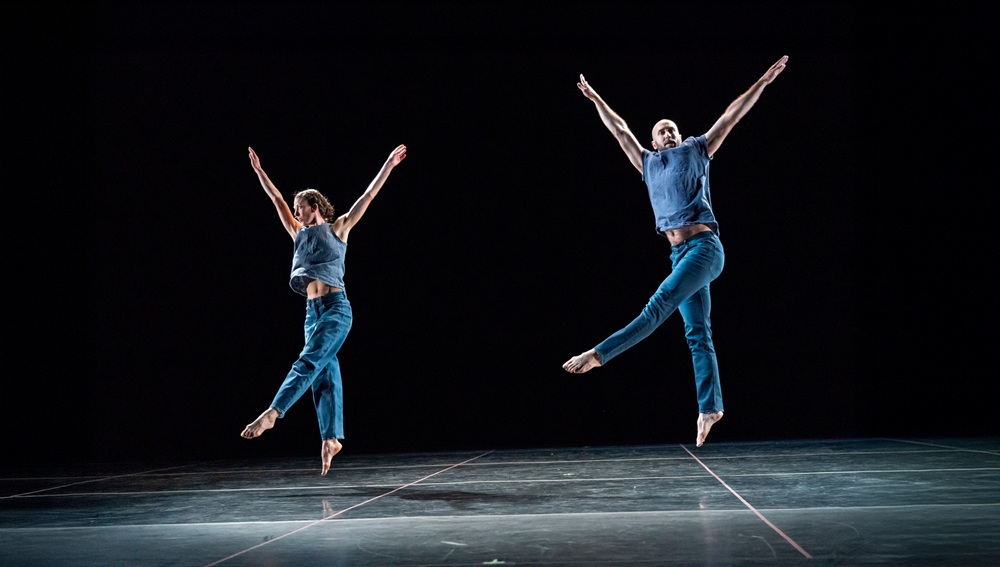
The upcoming debut of the Trisha Brown Dance Company at Vivo Performing Arts is not just another date on the calendar; it marks a significant moment in the world of modern dance, especially for the Boston area, where the company hasn't performed in 15 years. This performance will feature a curated program that spans decades of Brown's groundbreaking work, showcasing the evolution of a visionary postmodern choreographer whose influence has permeated not only the dance realm but also visual arts. As we delve into the details of this event, one can't help but draw parallels to other recent highlights in the dance community, such as Dance takes center stage in Lincoln Center’s ‘Summer for the City’ and the upcoming recognition of actress Katie Holmes at ABT’s 2026 Spring Gala. These events collectively illustrate a resurgence of interest in dance as a vibrant and essential form of artistic expression.
Trisha Brown's work is characterized by its innovative merging of movement and visual art, exemplified in pieces like *Glacial Decoy*, which was created in collaboration with the renowned artist Robert Rauschenberg. This piece not only represents a key moment in Brown's career—it also serves as a landmark in the dialogue between dance and visual artistry. The incorporation of Rauschenberg's photographic projections and unique costume design transforms the audience's experience, prompting a deeper understanding of how dance can transcend traditional boundaries. As viewers engage with this interplay, they are invited to reconsider their perceptions of both art forms, an essential conversation in our increasingly multidisciplinary world.
Furthermore, Brown's repertoire encapsulates the evolution of her artistic vision over the years. Each work selected for this performance reflects a distinct phase of her career, allowing audiences to witness the trajectory of her creativity and the broader cultural shifts that inform it. This retrospective approach not only celebrates Brown’s legacy but also inspires current and future generations of dancers and choreographers to explore their own artistic voices. The significance of this revival cannot be overstated; it serves as a reminder that the conversation around dance is ever-evolving and always relevant.
In an era where body positivity and self-expression are increasingly emphasized, the Trisha Brown Dance Company's return is a timely reminder of the power of movement as a means of liberation. Brown's work encourages individuals to embrace their bodies, fostering a spirit of confidence and acceptance that resonates far beyond the theater. Just as pole dancing and fitness routines can empower individuals to feel good in their own skin, Brown’s choreography invites an exploration of the body as a vessel of expression. This connection between physicality and self-acceptance is crucial in today’s society, where body image issues can often overshadow personal well-being.
As we prepare for the performances on February 13 and 14, it's worth contemplating the broader implications of Brown's work and the dance community's role in promoting inclusivity and positivity. Will this resurgence of interest in postmodern dance inspire a new generation to engage with their bodies as instruments of both art and self-acceptance? The upcoming shows may not only captivate audiences but also ignite conversations that could lead to a more profound appreciation of the arts as a vehicle for personal and social transformation. The dialogue initiated by Trisha Brown's legacy is as vital today as it ever was, and the impact of her work will continue to inspire future artists to push the boundaries of what dance can achieve.
Making their debut at Vivo Performing Arts, Trisha Brown Dance Company brings a program spanning decades of the visionary postmodern choreographer’s groundbreaking career. Performances take place at Boston Arts Academy Theater February 13 at 8 p.m. and February 14 at 2 p.m.
Each performance includes three works by Brown, representing distinct stages of her prolific career.
Created in 1979 by Brown and artist Robert Rauschenberg, Glacial Decoy marked the choreographer’s first work for the proscenium stage and a landmark collaboration between dance and visual art. Commissioned by the Walker Art Center in Minneapolis, the piece features Rauschenberg’s black-and-white photographic projections and translucent costumes, transforming everyday images into a poetic landscape. Danced to silence, the work is a mesmerizing fusion of continuous, abstract movement and visual rhythm that upon its premiere expanded the possibilities of contemporary dance.
Son of Gone Fishin’ premiered at Brooklyn Academy of Music in 1981, this work is a hallmark excerpt from Brown’s Unstable Molecular Cycle, a series rooted in memorized improvisation. From six dancers, precise yet ever-shifting patterns emerge and dissolve, which Brown likened to ripples spreading across water. Set to music by Robert Ashley and illuminated by lighting inspired by Donald Judd’s sculptural designs, the work balances structure and volatility.
Rogues is a late-career work from 2011 that features two dancers in a playful yet deliberate exchange of mirroring and variation, showcasing Trisha Brown’s gift for structured spontaneity. The duet premiered at New York’s Fall for Dance Festival following an intensive studio process involving Brown, former company dancer Lee Serle, and Neal Beasley. The work grew out of Serle’s mentorship with Brown through the Rolex Mentor and Protégé Arts Initiative.
“For decades, Trisha Brown reshaped the language of contemporary dance, expanding what movement could express and where it could live,” says Gary Dunning, President and Executive Director of Vivo Performing Arts. “Emerging from the groundbreaking Judson Dance Theater, her work combined conceptual rigor with accessibility, using systems, repetition and collaboration to create something surprising and profound. Her partnerships with artists like Robert Rauschenberg, Laurie Anderson, John Cage, and Donald Judd helped redefine what dance could be. That legacy continues to resonate through the extraordinary dancers of Trisha Brown Dance Company. Welcoming the Company to Vivo Performing Arts for the first time, after a 15-year absence from Boston, is a milestone for dance lovers—a rare chance to experience the enduring power, pedigree and physical virtuosity of an artist whose influence still shapes the field today.”
“This program traces the evolution of Trisha Brown’s artistic vision, from her early collaborations with visual artists to the refined clarity of her later works,” says Kirstin Kapustik, Executive Director of Trisha Brown Dance Company. “Sharing these dances in Boston celebrates Trisha’s extraordinary legacy while showing how alive and relevant her choreography remains today. Through the dancers, audiences can experience the intelligence, generosity, and quiet daring that define her work.”
Celebrity Series continues its partnership with Boston Arts Academy (BAA), where students work with and learn alongside professional theater and dance artists. Throughout Trisha Brown Dance Company’s on-site residency, BAA musicians and dancers will participate in an artist-led master class during production week, attend an open dress rehearsal, and shadow production staff.
Additionally, a post-show conversation and Q&A with dance writer Christine Jowers, founder and editor-in-chief of The Dance Enthusiast, follows the February 14 performance.
Tickets from $62-$94 are available now at vivoperformingarts.org
The post Trisha Brown Dance Company Debuts at Vivo Performing Arts with their First Boston-Area Show in 15 Years appeared first on Dance Informa Magazine.
Read on the original site
Open the publisher's page for the full experience