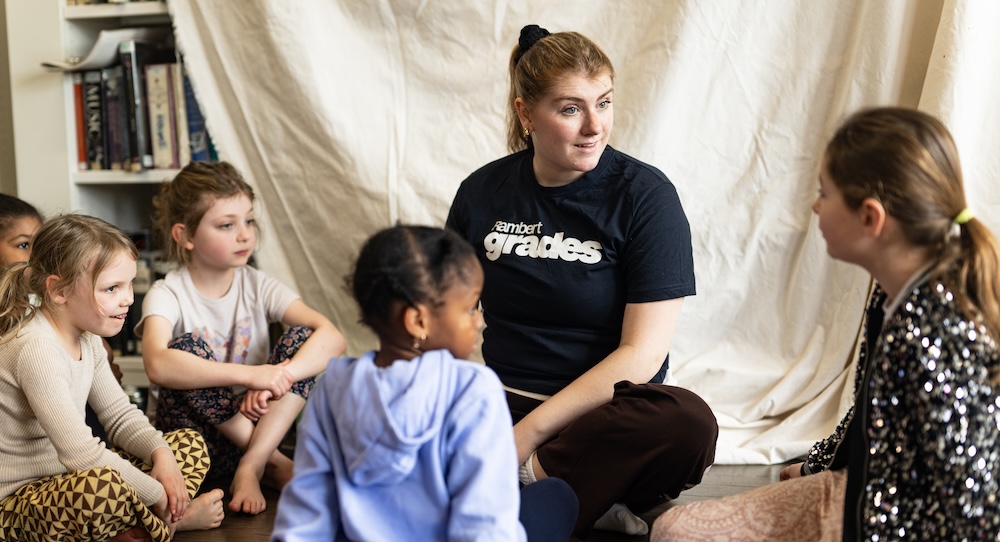
There is something quietly radical about a dance syllabus that says "progressive" and actually means it. Rambert Grades has opened its 2026-27 Syllabus Training to practitioners worldwide, and the news here isn't just about technique. It is about access. Ten new training opportunities, delivered online and tailored to different time zones, means a teacher in a small studio in Ohio can access the same contemporary dance education as someone in central London. That matters. It matters because so much of dance training has been gatekept by geography and by who you happen to know. This feels like the door being pushed open, and we are here for that energy.
The syllabus itself, Ofqual registered and supporting children from Creative Movers through to Grade 8, is a reminder that dance education is not a luxury. It is a foundation. And it connects beautifully to the work we have been watching elsewhere. Consider Seen, Supported, and Strong: Adia Anselmi's NYC Performance Explores Connection, where performance becomes a space for human connection, or the community-building energy of the Chicago Dance Company Celebrates New Works and Rising Talent in 2026-27 Season. What ties these together is a simple truth: dance is not about perfection. It never was. It is about expression, about confidence, about letting your body tell the truth. Rambert Grades seems to understand that. This is not about churning out little automatons who hit every mark. It is about nurturing a love for movement that will carry these children through life, whether they become professionals or not.
Now, here is our honest take. The fact that this training is online and time-zone friendly is the real story. We have seen too many brilliant syllabi gather dust because they were only accessible to a privileged few. This move says something important: your location should not determine your potential. And yes, we know online learning has its limits. You cannot fully replace the energy of a live studio, the physical correction of a teacher's hands, the electricity of dancing alongside others. But for a teacher who has been waiting years for an opportunity like this? It is a game-changer in the truest sense. The Martha Graham Dance Company Finds New Home, Inspires in Times Square reminds us that dance institutions are evolving, finding new ways to meet audiences where they are. Rambert Grades is doing the same for teachers. It is not about replacing the studio. It is about making sure the studio is not the only place where learning happens.
So what would we tell a reader who asked us about this? We would say this: if you have ever felt that your teaching practice was limited by your circumstances, this is your sign. Not because this is easy. It is not. Learning a new syllabus, even online, takes discipline and heart. But it is an invitation. It is a chance to bring something fresh back to your students, to show them that their own potential is not bounded by a zip code. The concrete thing to watch? How the dance community responds when geography stops being a barrier. Because if this works, and we believe it will, it could change how every syllabus is taught from here on out. And that is a future worth dancing toward.