Historic Danish Warship Sunk By Horatio Nelson Found After 225 Years In Copenhagen Harbour
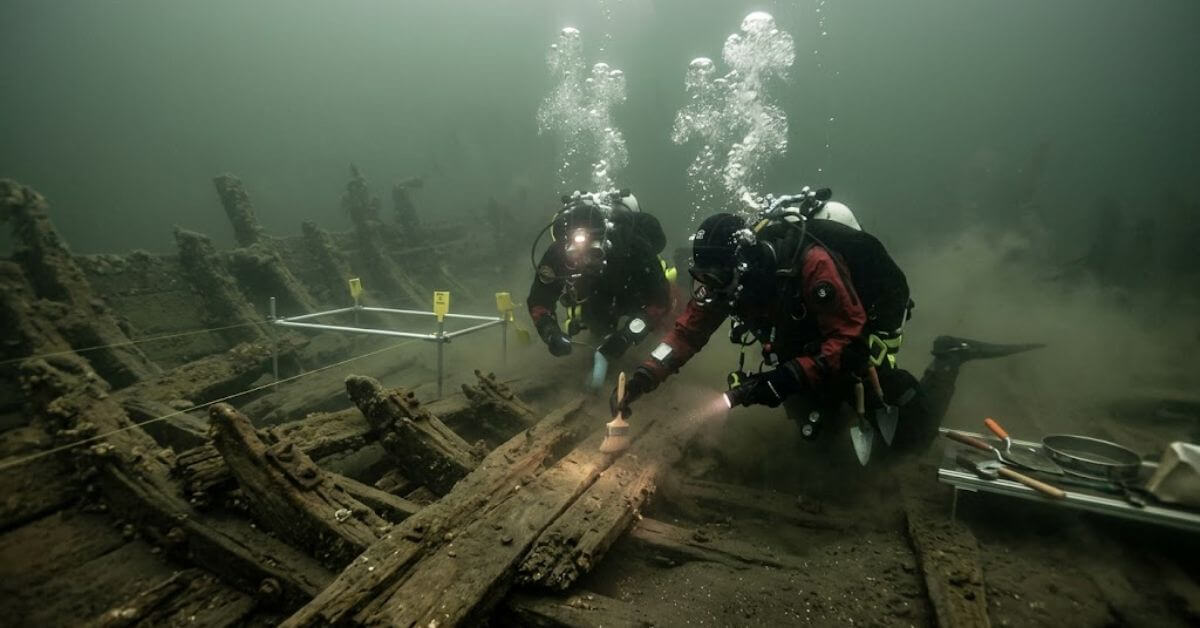
More than 200 years after it was sunk during the Battle of Copenhagen, a Danish warship has been found on the seabed of Copenhagen Harbor by marine archaeologists.
The ship is believed to be the Dannebroge, a Danish flagship destroyed during the battle when British forces led by Horatio Nelson attacked Denmark’s fleet.
The discovery was announced by the Viking Ship Museum, which is carrying out the underwater excavation.
Divers are working about 15 metres below the surface in thick sediment and almost zero visibility. In many places, they cannot see anything and have to feel their way through the seabed.
The work is urgent because the site will soon be covered by construction linked to the Lynetteholm project, a large housing development planned in the harbour and expected to be completed by 2070.
The wreck was located after surveys began last year in an area believed to match the ship’s final position. Experts say the wooden remains match old drawings of the vessel.
Tests using tree rings have also confirmed the wood dates back to the time the ship was built.
Several items have been recovered from the site, including two cannons, uniforms, insignia, shoes, bottles and ceramics.
Archaeologists also found part of a sailor’s lower jaw, which could belong to one of the 19 crew members who were never accounted for after the battle.
The seabed around the wreck is filled with cannonballs, making the work more difficult for divers moving through silt-filled water.
The Dannebroge was at the centre of the fighting during the 1801 battle. Danish forces had formed a defensive line outside the harbour, but British ships attacked and defeated them.
The aim was to force Denmark out of an alliance with Russia, Prussia and Sweden. Thousands of people were killed or wounded in the fighting.
The ship, commanded by Commodore Olfert Fischer, became one of the main targets. Cannon fire damaged its upper deck, and incendiary shells later caused a fire on board.
According to archaeologists, being on such ships during battle was extremely dangerous, as wooden splinters from cannon hits caused serious injuries.
The damaged vessel later drifted away and exploded. Historical records say the blast was heard across Copenhagen.
The battle is also linked to the phrase “turn a blind eye,” which is believed to have come from Nelson ignoring a signal during the fight, despite having lost sight in one eye.
After the battle, Nelson offered a truce, and a ceasefire was later agreed with Denmark’s Crown Prince Frederik.
Archaeologists say the discovery can help them better understand what happened on board during the battle.
Along with weapons and ship parts, everyday items like bottles and basketry have been found, giving some idea about the lives of the crew.
Work at the site will continue for the next few months as teams try to document and recover as much as possible before construction begins in the area.
References: The Indian Express, CNN
Want to read more?
Check out the full article on the original site