Trump Orders Naval Blockade Targeting Iranian Ports After US-Iran Ceasefire Talks Collapse
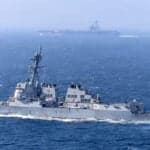


The United States has announced a naval blockade targeting Iranian ports after ceasefire talks with Iran ended without any agreement in Pakistan.
Donald Trump said the US Navy would begin blocking ships entering or leaving the Strait of Hormuz, calling it a response to what he described as Iran’s control over the route and its plans to charge vessels for passage.
Later, US Central Command clarified that the blockade would not fully shut the strait. Instead, it will apply only to vessels going to or coming from Iranian ports, including those along the Arabian Gulf and the Gulf of Oman.
Ships travelling between non-Iranian ports will still be allowed to pass.
The blockade is set to begin on Monday at 10 a.m. EDT. The US military said it will be enforced against vessels of all nations linked to Iranian ports and that commercial ships will be given further instructions before it starts.
The Strait of Hormuz remains one of the world’s busiest shipping routes, carrying about 20% of global oil before the conflict.
Traffic has already been affected in recent weeks, although more than 40 commercial ships have crossed the strait since the ceasefire began.
The US has also warned that any vessel found paying a toll to Iran for safe passage could be intercepted in international waters. Officials said the move is aimed at stopping Iran from benefiting economically while restricting access to the strait.
Oil markets reacted quickly. US crude rose by around 8% to $104.24 per barrel, while Brent crude increased by 7% to $102.29. Before the conflict in late February, Brent was trading near $70 per barrel.
Trump said the blockade could become stricter and described it as “all or none,” meaning no ships would be allowed through if Iran does not change its position. He also said countries that support Iran could face a 50% tariff, including those that continue buying Iranian oil.
Per reports, the US is also considering limited military strikes to increase pressure on Iran. Trump said key infrastructure such as power plants and desalination facilities could be targeted if tensions rise further.
Iran responded by saying the strait remains open for non-military vessels but warned that any military ships entering the area would face a strong response. The Iranian Revolutionary Guard said the waterway is under Iran’s full control.
During the 21-hour talks in Pakistan, both sides failed to agree on several key issues. The US demanded that Iran stop uranium enrichment, dismantle major nuclear facilities, allow access to its enriched uranium stockpile, reopen the strait fully and end support for groups such as Hamas, Hezbollah and the Houthis.
US Vice President JD Vance said Washington needs clear assurance that Iran will not pursue nuclear weapons. Iranian officials said the talks broke down over a few major points and accused the US of making excessive demands.
Iran’s parliament speaker Mohammad Bagher Qalibaf said progress had been made but warned that Iran would respond if it is attacked. He said the US must decide whether it is willing to build trust.
The talks were the highest-level meeting between the two countries in decades. Pakistan said it would continue efforts to restart dialogue, while Iran also indicated it is open to further discussions.
Other countries have called for a diplomatic solution. The European Union urged both sides to return to talks. Oman’s foreign minister asked for compromises, and Russia said it is ready to help mediate.
The current ceasefire is due to end on April 22, and there is no clarity yet on what will happen next.
References: Al Jazeera, CNBC
Want to read more?
Check out the full article on the original site